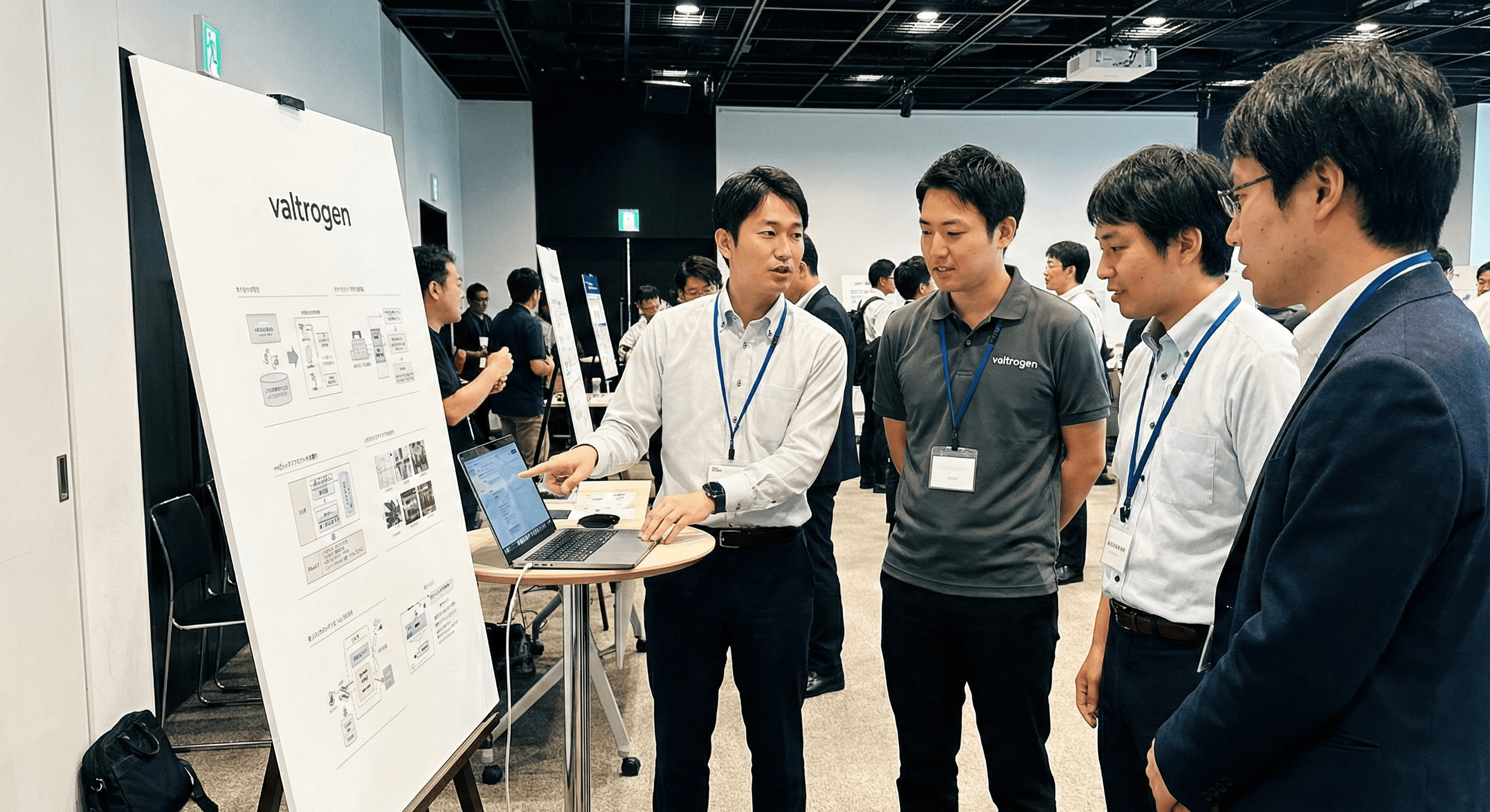
This week we ran a product and solution showcase in Tokyo. The goal wasn’t a “launch”—it was to discuss how teams in Japan can evaluate, pilot, deploy, and operate valtrogen in a way that fits existing networks and processes.
We’re building a long-term Japan presence and working with local enterprises and solution partners to make delivery and support more operationally concrete.
Event overview
- Format: small-group demo, Q&A, and implementation discussion
- Audience: enterprise engineering teams, integration/channel partners, teams with explicit security and network requirements
- Outputs: requirements list, pilot scope and validation criteria, operational collaboration plan and responsibilities
What we presented
- Local support and escalation paths (contact routes, severity levels, handoffs)
- A rollout playbook: evaluation → pilot → limited production → scale, including success metrics and rollback conditions
- Integration touchpoints with enterprise workflows: access control, audit requirements, change windows, operational handover
- Security and operations practices: traceable configuration changes, incident response, observability and troubleshooting approach
Working with local enterprises
Our collaboration model in Japan is intentionally engineering-driven: break requirements into testable deliverables, and reduce friction through clear interfaces and processes.
- Joint validation: define pilot scenarios, acceptance criteria, and verification methods
- Rollout planning: change windows, release cadence, rollback plans, and incident playbooks
- Operations alignment: alert severity, escalation, post-incident review and continuous improvement
- Feedback loop: track Japan-specific items with clear prioritization
Compliance and enterprise concerns
A large part of the discussion centered on compliance, auditability, and day-2 operations. We avoid vague claims and instead translate concerns into concrete requirements and validation steps.
- Logging and audit: what needs to be traceable, retention expectations, access controls
- Change management: how to safely operate configuration changes within enterprise processes
- SLA and support: response and escalation definitions, clear boundaries
- Observability: how to troubleshoot issues across network, configuration, and endpoint layers
Next steps
Next, we’ll convert the discussion into a concrete pilot checklist and validation plan, progress the highest-priority integrations, and continue improving local collaboration and support processes. We’ll share public updates through the News page.